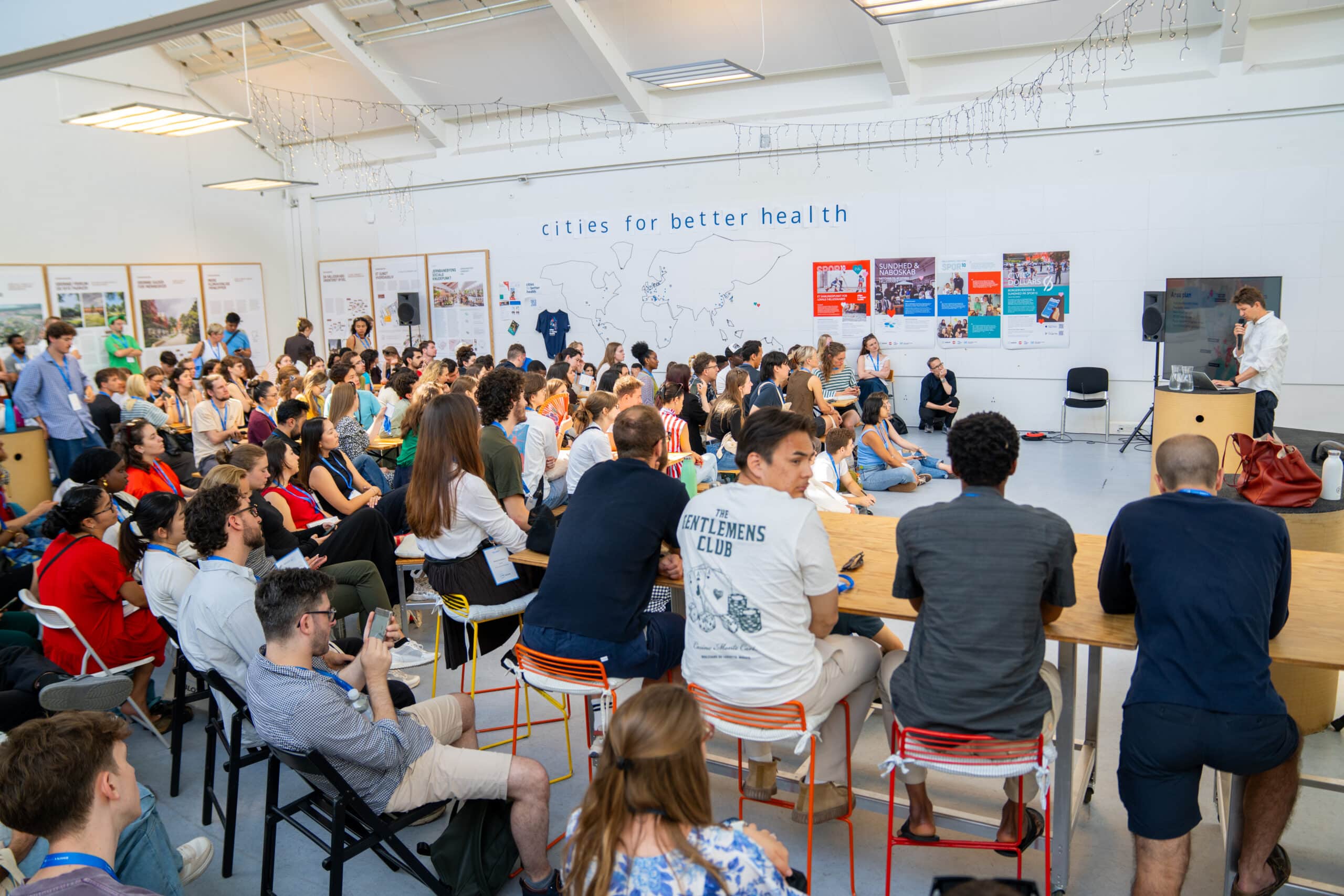
For Anna Ivashchenko and Iryna Ruzhylova from the Partnership Fund for a Resilient Ukraine (PFRU), a multi-donor programme implemented by Chemonics UK, participating in UNLEASH Europe 2026 in Copenhagen was an opportunity to explore these ideas with 200 young changemakers and innovators from across Europe. Although the programme focused on the future of cities and the just green transition, it also offered practical lessons and new perspectives relevant to Chemonics’ work in Ukraine, from recovery and resilience to environmental initiatives.
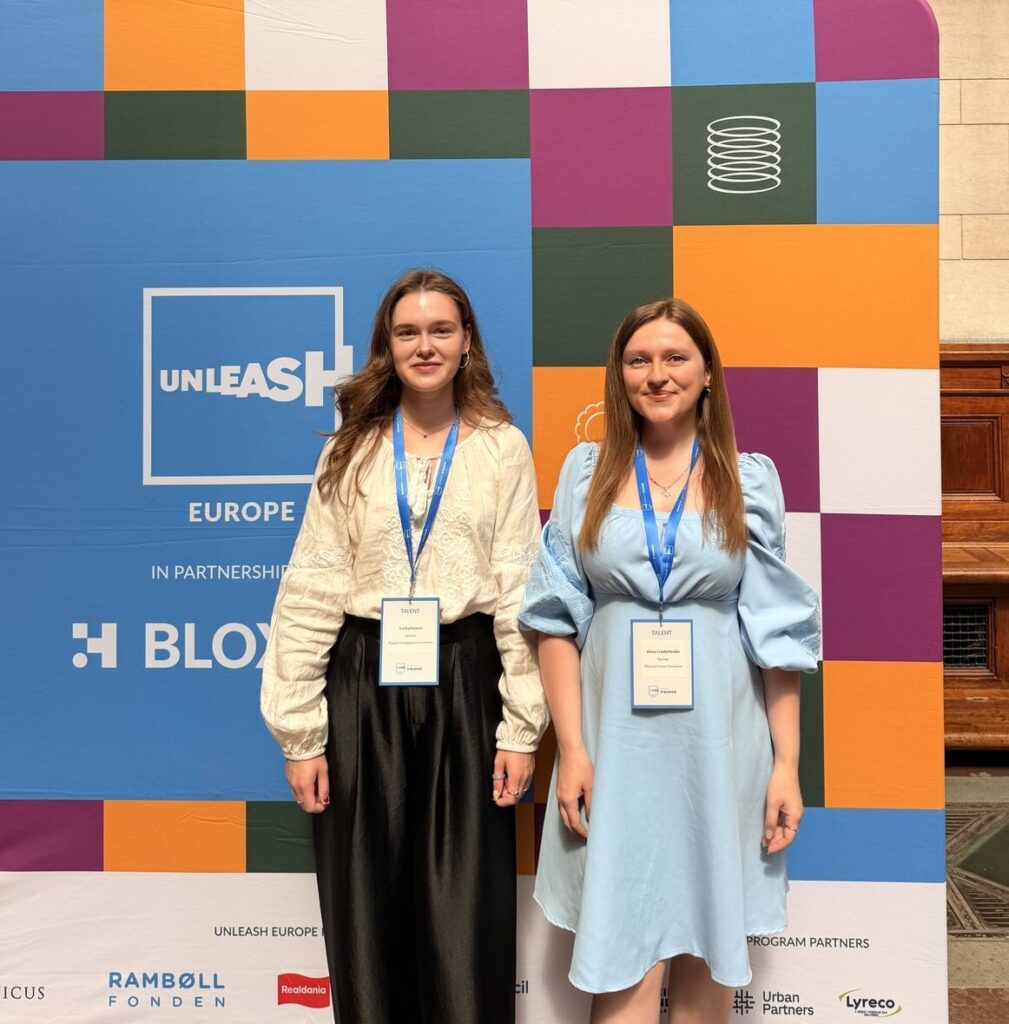
Bringing Ukrainian perspectives into a European innovation space
Recognising the valuable perspective they could bring from their work with PFRU, Chemonics sponsored Anna and Iryna’s participation in UNLEASH Europe 2026. Working in Ukraine has given them first-hand experience of how communities must balance urgent needs with longer-term priorities, often in rapidly changing circumstances. That perspective contributed to wider discussions on sustainability, urban resilience, and social inclusion, while creating opportunities to exchange approaches that could inform recovery efforts in Ukraine and elsewhere.
The programme also gave them an opportunity to consider how different approaches to innovation could be relevant to Ukraine’s recovery: How can communities rebuild in greener, more resilient ways? How can infrastructure decisions better reflect the needs of the people they affect? And how can partnerships turn promising ideas into practical solutions?
During the week in Copenhagen, Anna and Iryna explored these questions through hands-on collaboration. Each worked in international, cross-disciplinary teams on a different thematic track while drawing on a shared understanding of what it means to design solutions for communities facing disruption, uncertainty, and rapid change.
Iryna joined the Rapidly Changing Environments track, where her team developed GODDi, a concept exploring how artificial intelligence could support more inclusive infrastructure planning by integrating Sámi knowledge – the traditional and lived knowledge of the Indigenous Sámi people of northern Europe – into project decision-making. The proposed platform would help translate project documentation, gather stakeholder input, and support long-term environmental impact assessments before decisions are made.
“In just five days, we moved from identifying a complex challenge to developing a tangible solution. The structured approach to uncovering root causes before generating ideas is something I’ll definitely bring into my future work.”
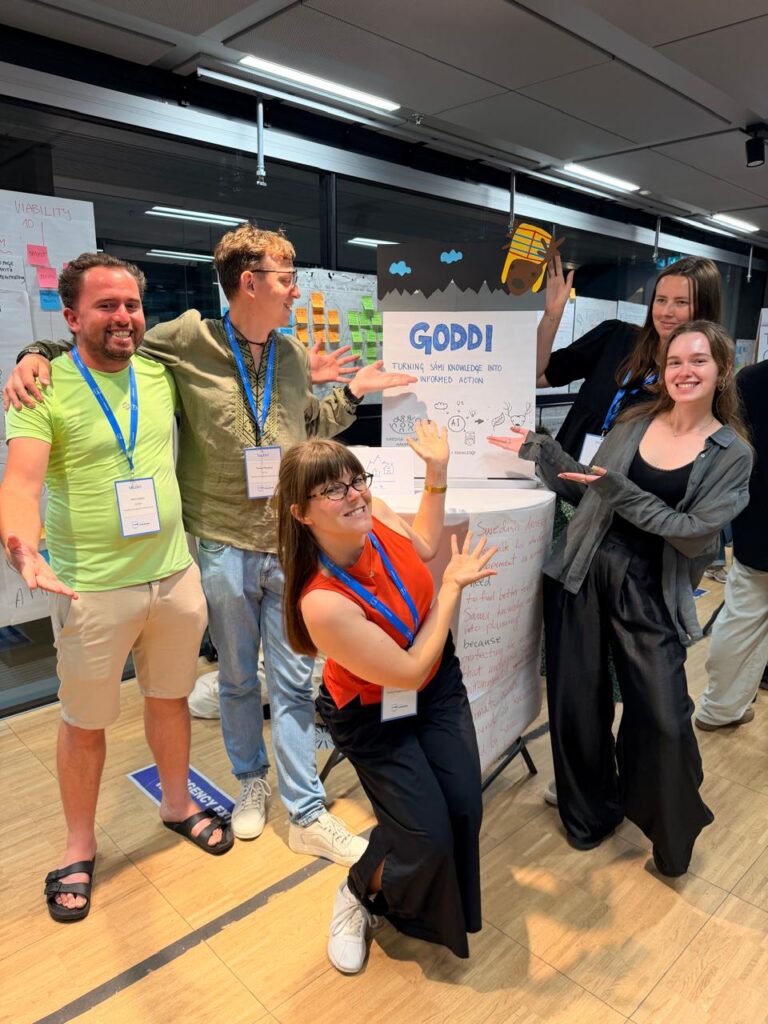
For Ukraine, where recovery planning often requires balancing urgent infrastructure needs with long-term environmental and social considerations, this kind of approach has clear relevance. Iryna’s experience underscored the importance of looking beyond technical solutions alone and asking whose knowledge is included, whose needs are prioritised, and how decisions can remain responsive as conditions change.
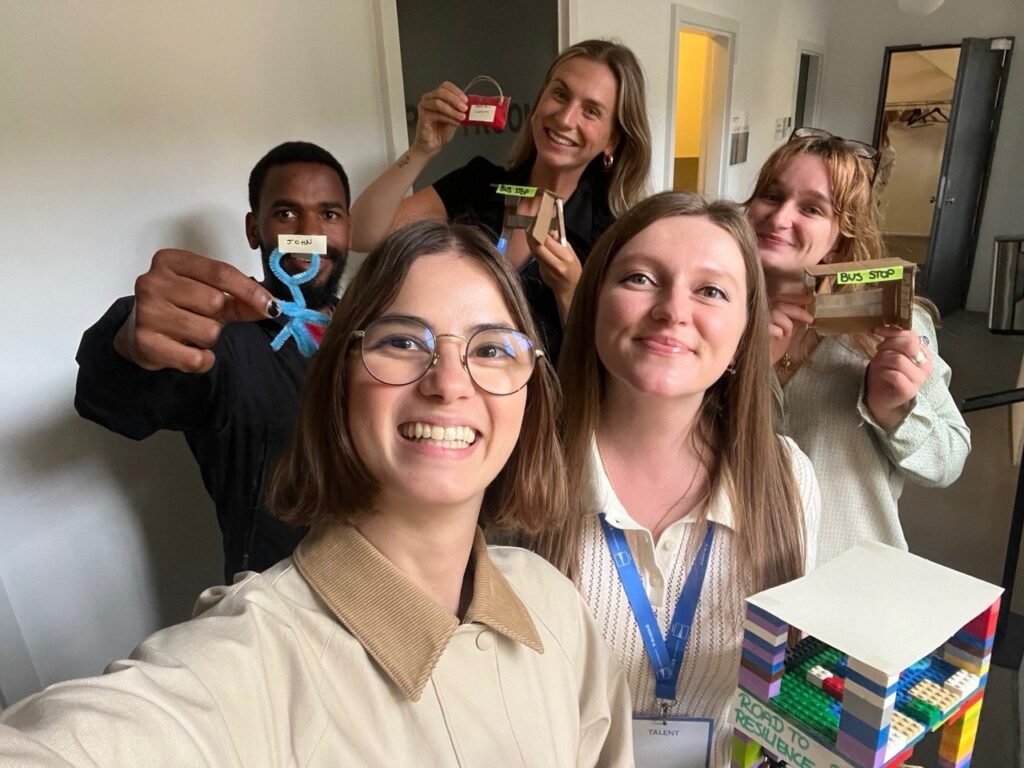
Anna worked in the Just Green Transition track on Roads to Resilience, a concept exploring how existing urban infrastructure could be repurposed to support people experiencing homelessness during extreme weather. Her team proposed transforming Dublin buses into mobile, climate-resilient shelters that could provide immediate support during emergencies and connect people to services.
For Anna, the experience reinforced a lesson that is especially relevant to Ukraine’s recovery: rebuilding communities is about more than restoring physical infrastructure. It is also about rebuilding trust, social cohesion, and a shared sense of belonging.
“The UNLEASH innovation methodology gave us a structured yet creative framework to move from problem framing to solution design, ensuring our idea was both human-centred and grounded in systems thinking. What I found particularly valuable was learning how to navigate complex challenges by keeping communities and their lived experiences at the centre of the process, while drawing on diverse perspectives and expertise. These lessons are already informing my work on PFRU’s Culture and Identity Project, including the Room for Heritage programme, where cultural spaces are being reimagined as hubs for dialogue, learning, and recovery in conflict-affected communities.”
Translating learning into Ukraine’s recovery work
Together, Anna and Iryna’s experiences demonstrate how innovation approaches can help practitioners look at familiar challenges from new angles. In Ukraine, where recovery needs are immediate, but the decisions made today will shape communities for decades, this way of working can be particularly valuable.
The methods explored at UNLEASH – human-centred design, systems thinking, stakeholder engagement, and rapid collaboration – can help teams understand challenges more fully, test ideas early, and bring local knowledge and diverse expertise into the design process.
The perspectives Anna and Iryna brought back from Copenhagen can help inform this work as Chemonics continues to support Ukraine’s recovery and resilience.
“UNLEASH reinforced my belief that effective recovery starts with listening to communities and designing solutions around their lived experiences. Since returning, I have begun applying problem-framing and ideation tools from the programme to my work on PFRU’s Culture and Identity Project, including planning the third iteration of the Room for Heritage programme. These approaches help us navigate challenges more systematically, connect local priorities with broader recovery goals, and design interventions that are both community-driven and scalable,” Anna explains.
Iryna also shared that during her teams’ recent strategic session, she was excited to introduce several problem-framing and ideation tools that she brought from her experience with UNLEASH. The methodology’s universal nature makes it relevant across industries and contexts, proving that innovation is a mindset as much as a process, and a key driver of positive change and impact.
The value of UNLEASH extends beyond individual projects. Anna and Iryna are now collaborating on a cross-cutting initiative to strengthen the operational resilience of cultural institutions affected by the war. Drawing on insights from UNLEASH, they are applying approaches such as problem framing, stakeholder engagement, and collaborative planning to emergency support activities. The experience has reinforced the value of working across disciplines and workstreams, helping ensure that interventions respond to immediate needs while contributing to the long-term resilience of Ukraine’s cultural sector.
Chemonics has partnered with UNLEASH since 2019 as a Lead Scale Partner, supporting programmes that bring together young changemakers to develop innovative, locally informed responses to complex global challenges. At UNLEASH Europe 2026, that approach focused on the built environment and how more circular, inclusive, and climate-resilient communities can be designed.