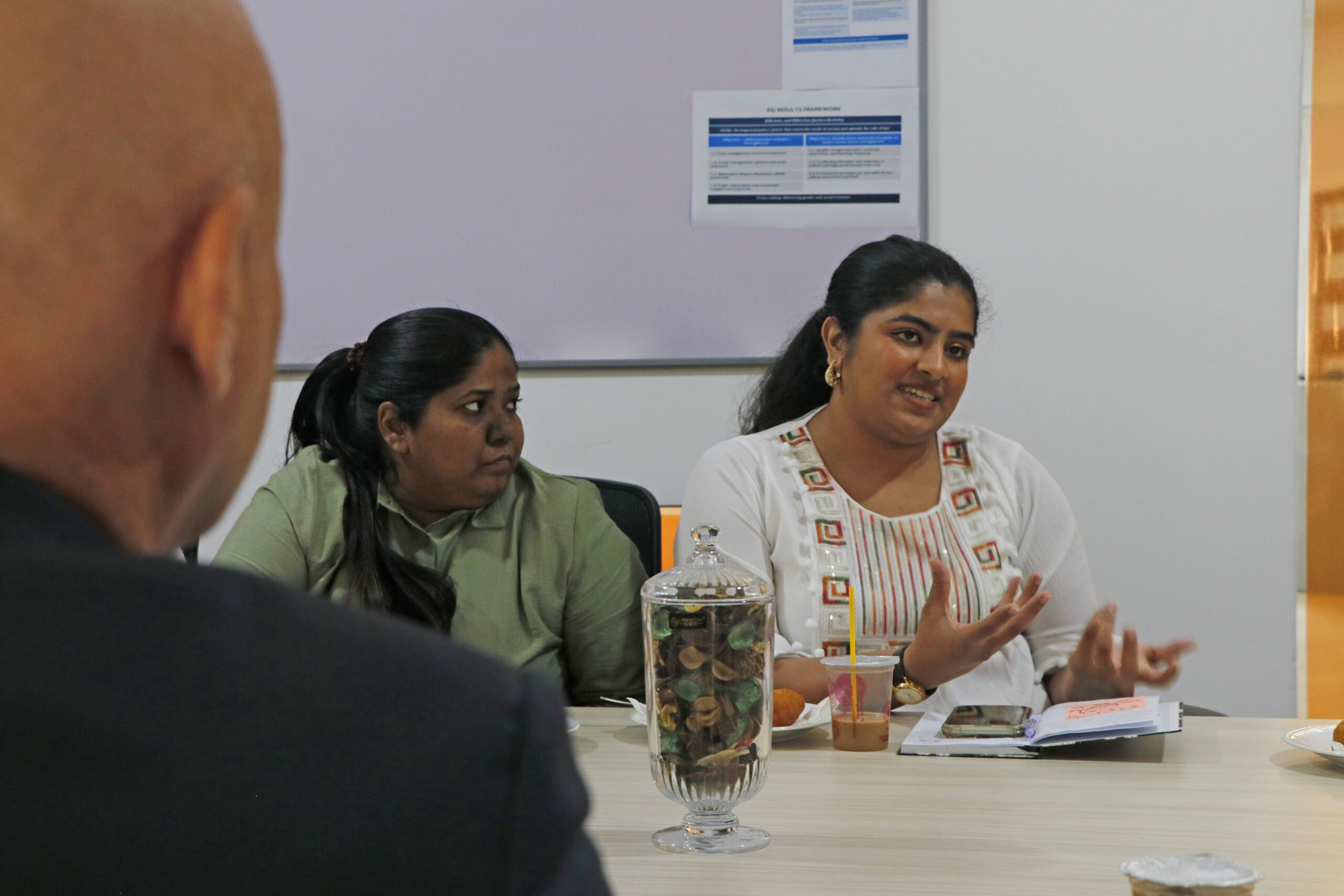
In Nueva Vizcaya, a small farming community in the Philippines, Sutera Taberna, a pineapple farmer and mother, used to sell her produce by the roadside or to an intermediary at a loss. Chemonics partnered with a local agricultural institution to co-create Deliver-e, a digital market systems platform which allowed farmers to list fresh produce online, enabling direct business-to-business selling and directly linking sellers to national buyers. Now, farmers could independently assess market pricing and fulfill bulk orders to supermarkets, food processors, and restaurant chains. Sutera used Deliver-e to fulfil one of her largest bulk orders – 1.5 tons of pineapples for Sodexo Philippines. This fundamentally changed Sutera’s financial outlook by providing access to national supply chains at fair prices, which in turn, minimised crop losses.
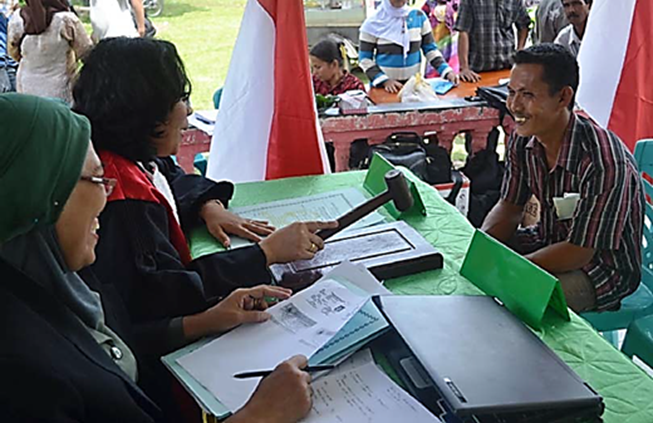
Meanwhile, in the rural Indonesian communities of Aceh, Riau, and West Kalimantan, fragmented procedures and a shortage of legal professionals limited residents’ ability to access formal justice. Chemonics trained more than 120 community paralegals – including many already-trusted women and marginalised groups – to operate as community‑based justice actors, helping their neighbours navigate court processes, document evidence, and pursue remedies for land disputes, illegal logging, and environmental harms. By shifting problem‑solving authority closer to affected populations, Chemonics strengthened confidence in Indonesia’s legal system and reinforced the belief that justice was attainable through locally accessible, locally mediated pathways. While strategic reform of the justice system remains a national responsibility, this approach localised access by placing practical authority in the hands of those best positioned to bridge formal and informal justice systems.
At first glance, these stories may seem unrelated. However, they share a fundamental principle: when local actors take the lead, greater and more sustainable impact can be achieved. This belief sits at the heart of the global conversation around local partnerships and is central to the way Chemonics approaches our work. With 50 years of experience in more than 160 countries, and more than 7,000 experts in our global network, we know that the best solutions are designed by those with on-the-ground knowledge and experience. As many communities face concurrent crises, including climate shocks, conflict, displacement, and economic disruption, the value of local leadership – and the proximity, perspective, and continuity it provides – cannot be overstated.
Partnerships Built for the Long Term
For locally led development to be successful, we must build reciprocal relationships and coalitions that combine local knowledge, experience, and connections with global capabilities and efficiencies. These partnerships must shift decision-making to prepare local organisations to lead independently. True localisation requires integrating flexible, inclusive, and responsive processes – including co-creation, open innovation competitions, and direct grants – at every stage of the project lifecycle.
In Vietnam, Chemonics worked alongside international legal experts, universities, and the Vietnam Judicial Academy to jointly strengthen legal writing, use of precedent, and case management practices. Rather than applying an external model, the program integrated international good practice with Vietnamese legal traditions and courtroom experience, drawing on the practical insights of judges, prosecutors, and lecturers themselves. To extend impact nationwide, university lecturers helped shape the curriculum before cascading the training, ensuring future generations of legal professionals apply consistent and transparent standards in courts across Vietnam. This approach reflects a shift away from one‑way “capacity building” toward mutual capacity sharing, recognising that durable reform emerges when local institutions both shape and transmit knowledge.
Local leadership is not an abstract principle – it is something that Chemonics intentionally designs for and invests in every day. Two recent U.S. Government-funded programs in the Philippines were led by nationally respected technical experts working from inside the country’s financial and digital economy institutions. The sustainability of digital payment and e‑commerce reforms was strengthened by project leaders who later transitioned into senior public sector roles. This experience informed Chemonics’ approach to improving Sri Lanka’s energy sector. Technical support was embedded within core government entities, supporting locally led policy reform that was ultimately developed, owned, and advanced by Sri Lankan institutions themselves. Across these programs, Chemonics’ role was consistent: provide global expertise, systems, and accountability where needed – and ensure that authority, ownership, and leadership rests with local actors who will carry the work forward long after the program ends.
Measuring What Matters
When donors, implementers, and communities measure impact differently, it can become challenging to define what success looks like. Rigid indicators can become obstacles rather than tools. Fortunately, we have seen an evolution towards donors’ frameworks that prioritise outcome (rather than output) measurement and adaptive management. Donors are increasingly aligning metrics with partner‑country systems, rather than relying solely on self-imposed benchmarks.
The solution is not less accountability, but better designed accountability: a tiered indicator framework that pairs a focused set of outcome indicators for accountability with a flexible layer of adaptive, learning-oriented metrics that can evolve as conditions change. These metrics should be co-created with local partners – grounded in principles like mutuality, scalability, and sustainability – and shared back with the communities generating the data. When trust is built into measurement, and when accountability and adaptability are treated as complementary rather than competing, learning accelerates and results improve.
Action-oriented Locally Led Development
The momentum behind locally led development is strong, but sustaining this progress requires collective action. As donors experiment with longer timelines and more flexible funding, implementers must invest in relationships to design solutions that endure beyond a single project term. The future of development is already taking shape in communities, institutions, and partnerships around the world. The positive impacts are exponential – seen in stronger institutions, more resilient communities, and sustainable solutions that are shaped by those who understand the challenges best.
That is how we work in partnership with our local stakeholders. And that is how development delivers.
Banner image: Shelani Palihawadana, a participant in the Sri Lanka Young Lawyers Leadership Program, meets with Chemonics leadership to discuss gender equity issues facing young Sri Lankan lawyers.
Posts on the blog represent the views of the authors and do not necessarily represent the views of Chemonics.