Insights
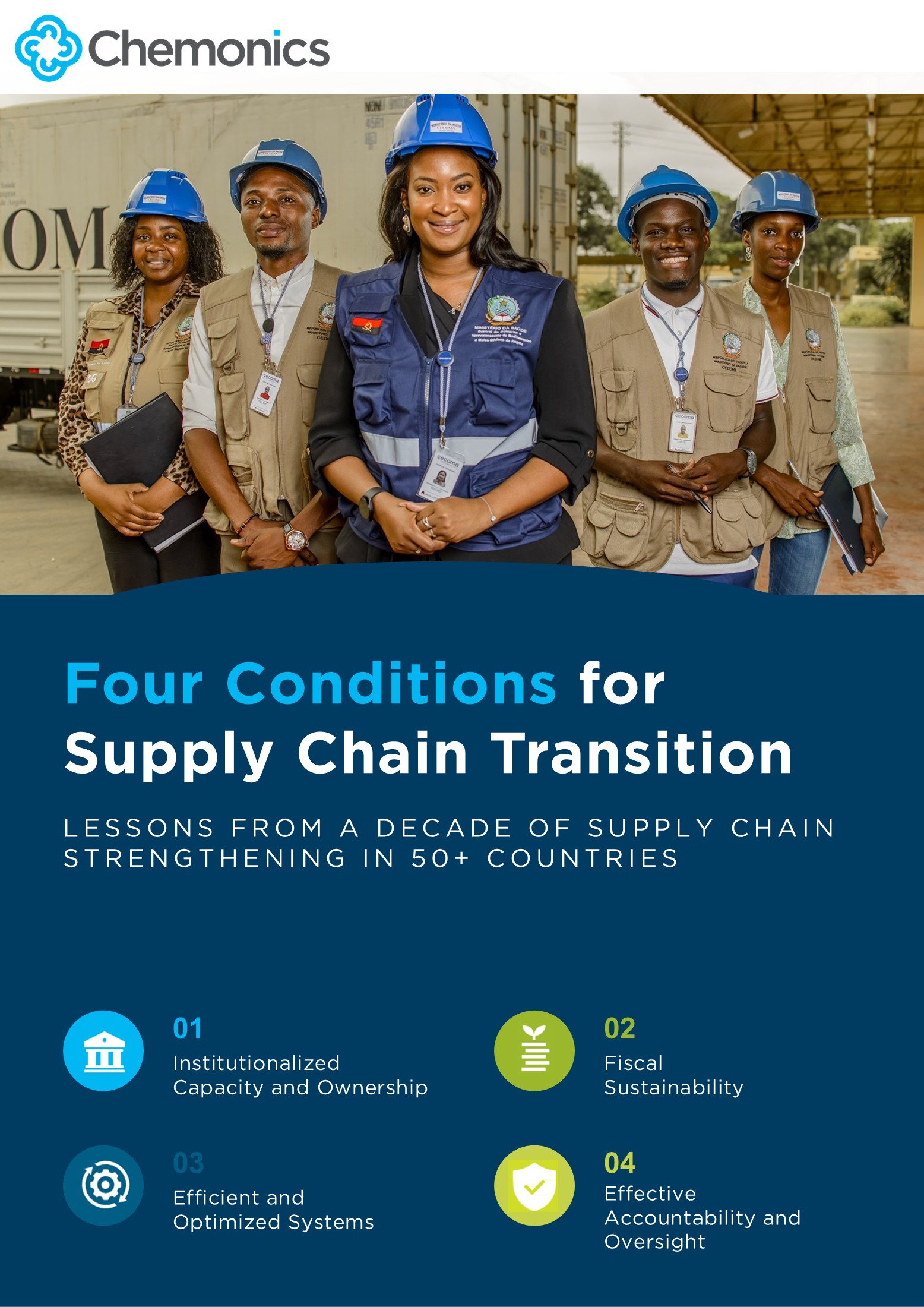
Four Conditions for Supply Chain Transition
Lessons from a decade of supply chain strengthening in 50+ countries
Article
How can countries manage the shift to greater ownership of their health supply chains without disruption?
Shrinking aid budgets, mounting pressure for aid reform, shifting donor policies, and stronger local government leadership are sharpening the focus on country ownership, accountability, and sustainability. For governments, donors, and partners, the key question is how to manage this shift without disrupting essential services or losing hard-won health gains – and health supply chains sit at the center of that challenge. Read the full article to explore four core conditions that, together, shape an effective handover of supply chain functions to government.
Authors
Jessie Davis | Change Management Senior Advisor, Chemonics
Neha Bhandari | Health Supply Chain Advisor, Chemonics
Kylie Telfer | Business Development and Health Portfolio Director, Chemonics
Judith Heichelheim | Managing Director, U.S. Global Health Supply Chain Program-Procurement and Supply Management (GHSC-PSM)
Kevin O’Loughlin | Senior Communications Specialist, GHSC-PSM
Our Experience
The Four Conditions

Our Work
U.S. Global Health Supply Chain Program
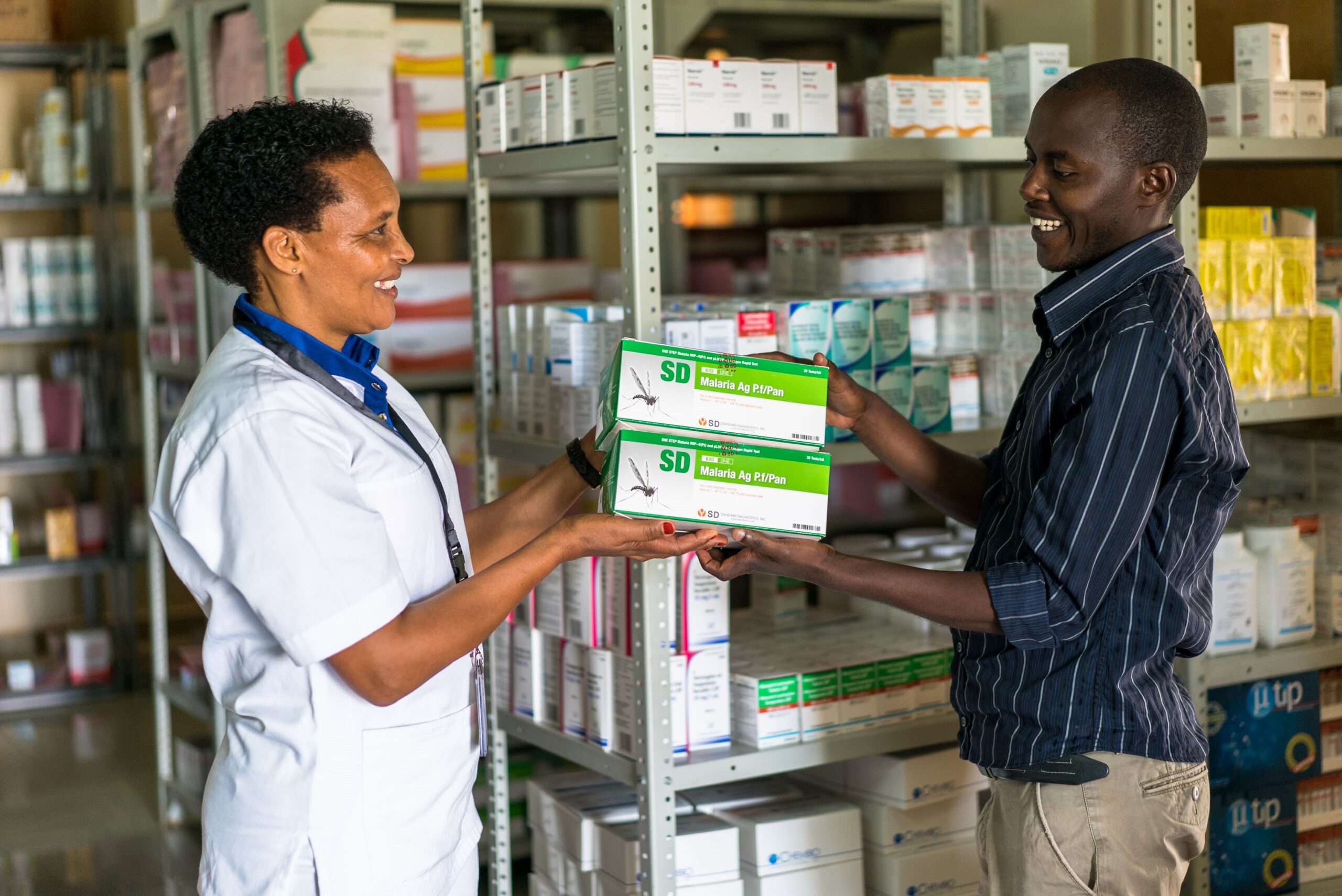
For more than a decade, Chemonics has implemented the U.S. Global Health Supply Chain Program-Procurement and Supply Management (GHSC-PSM) project, applying proven commercial practices to one of the world’s largest public health supply chains.
Across more than 50 countries, the project has delivered over $6 billion in medicines, diagnostics, and other health commodities while helping governments strengthen their own supply chain systems.