
Acute food insecurity is a situation marked by a population facing a shortage of food that threatens their lives and livelihoods. Without immediate intervention, prolonged food deprivation leads to acute malnutrition, which can ultimately result in death. In cases where large portions of the population are affected, famine can emerge.
Effective analysis of household coping mechanisms is crucial for understanding and addressing food insecurity. However, the Livelihood Coping Strategies (LCS) module, which is a key indicator used to assess acute food insecurity, is often not adapted to specific local contexts. This can lead to gaps in data relevance and accuracy, thus obscuring critical insights into food security dynamics.
Preventing Acute Food Insecurity Through Early Warning Systems
The Famine Early Warning Systems Network (FEWS NET) provided timely, accurate, evidence-based, and transparent food security early warning analysis to prevent famine and mitigate acute food insecurity. The program was created in 1985 in response to famines in East and West Africa and provided global coverage of acute food insecurity.
Hundreds of Chemonics team members from around the world provided integrated analyses of current and projected acute food insecurity in countries worldwide to support the programmatic decisions of USAID’s Bureau for Humanitarian Assistance. This team conducted acute food insecurity analysis and used an array of data to monitor populations at risk of acute food insecurity and assess their ability to cope with these risks.
How Households Cope: A Key Indicator of Food Insecurity
FEWS NET’s analysis relied heavily on secondary data collected by various partners including local governments, the United Nations, and NGOs. A key component of FEWS NET’s analysis was understanding how populations respond to shocks, such as drought, price spikes, or conflict, that threaten their food security. Rather than immediately cutting back on food consumption, households typically try to mitigate the effects of a shock through various coping mechanisms. For example, a farming household in Kenya may seek labor opportunities to earn money for food if their maize harvest fails. A pastoral household in Chad may spend savings or seek help from relatives if they lose their livestock in a conflict event. In any case, it is vital to identify if a household is engaged in negative and/or unsustainable coping because coping can mask food consumption deficits. Such kinds of negative coping strategies are also themselves a concern because they can pose a threat to the households’ livelihoods and threaten their food consumption in the near term.
The Livelihood Coping Strategies (LCS) module assesses how households cope with food insecurity and was an important tool in FEWS NET’s analysis. This module is a key outcome of acute food insecurity of the Integrated Phase Classification (IPC) system, which was used by FEWS NET to classify acute food insecurity. However, using the LCS module effectively requires context-specific adaptations, because it is this contextualization that ensures accurate and relevant insight into households’ food security situation. This contextualization is rarely done by those facilitating data collection, and the use of this module without contextualization can miss the nuances of local coping options. In many instances, respondents report that certain coping strategies are “not applicable” to their circumstances, suggesting that the tool is not capturing the full range of responses. This gap is one of several that highlight the need for more accurate and tailored data collection methods. To overcome these challenges, FEWS NET undertook efforts to refine the LCS module specifically for Somalia, tailoring it to better capture the local realities.
Contextualized Coping Strategies Enhances Food Security Analysis
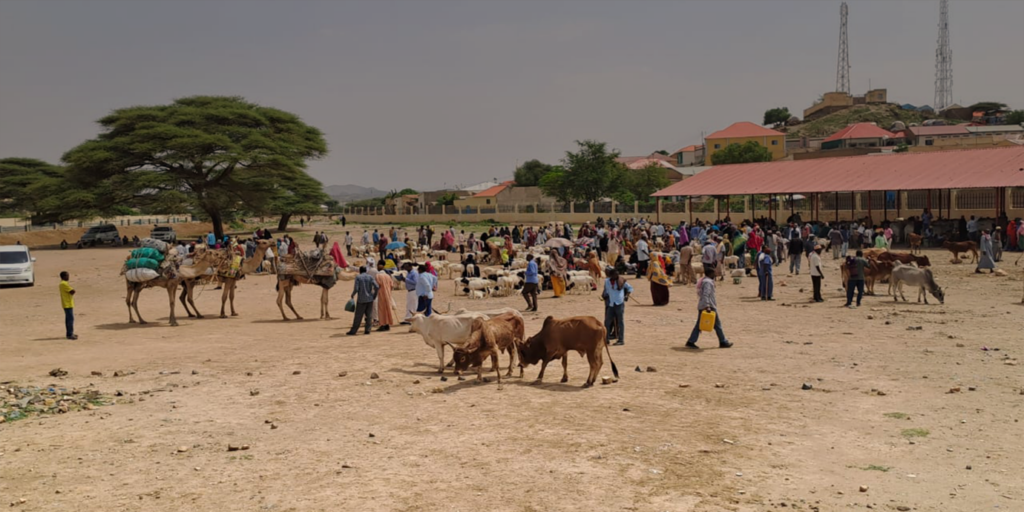
From 2022 to 2024, FEWS NET piloted a contextualized approach, testing various adaptations to enhance the module’s relevance and accuracy. FEWS NET carefully considered how this information collection differs from standard primary data collection in the humanitarian sphere, which focuses primarily on assessing immediate and urgent crises. The LCS contextualization work aimed to support improved data collection in the future and was therefore designed as a research study. This research had ethical considerations, as it required households to reflect on stressful situations and potentially harmful actions. To ensure all ethical concerns were considered, FEWS NET went through the process of obtaining approval from the Institutional Review Board (IRB) from the U.S. side, as well as obtaining the Somalian Government approval to conduct the research.
Following IRB approvals, FEWS NET’s research process involved conducting desk reviews, key informant interviews, and ultimately piloting surveys to test the effectiveness of a contextualized LCS module in Somalia. The results of FEWS NET’s surveys are promising and illuminate three key findings:
- A reduction in the number of respondents who indicated that a coping strategy was “not applicable.”
- More consistent responses regarding household access to food and resources.
- A deeper understanding of why households may not be able to engage in various coping strategies.
This research effort in Somalia demonstrates that contextualizing the LCS module can improve the quality and relevance of data on livelihood coping strategies. This approach can be replicated in other contexts to improve data collection on coping and, ultimately, food security analysis.
FEWS NET’s work to refine the LCS module is a contribution to improving the accuracy and effectiveness of food security analysis. By ensuring that data on coping is contextually relevant, analysts strengthen their ability to predict food crises and contribute valuable information to the prevention of famine.
This post was adapted from a blog written by Vanessa Roy.